Address
No. 274, 276 Yuqiao Road, Shaping, Heshan City,
Guangdong Province
Work Hours
Monday to Friday: 7AM - 7PM
Weekend: 10AM - 5PM
Address
No. 274, 276 Yuqiao Road, Shaping, Heshan City,
Guangdong Province
Work Hours
Monday to Friday: 7AM - 7PM
Weekend: 10AM - 5PM


A melamine dining table has a tabletop made from a wood-based board, usually MDF or particleboard, with a decorative surface containing melamine resin. The finish can resemble oak, walnut or marble, so the appearance alone will not tell you what is underneath.
For furniture buyers, that distinction matters when comparing quotes. Two tables may look similar in a catalogue yet differ in their core board, edge finish, frame and packing. Before choosing a melamine dining table set for your range, it helps to understand how those parts work together.
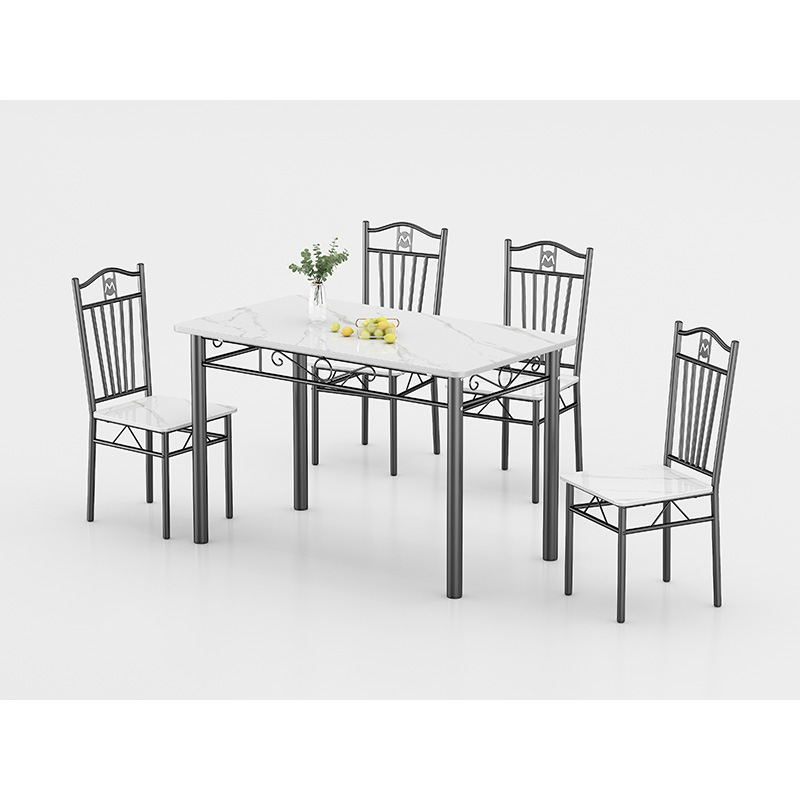
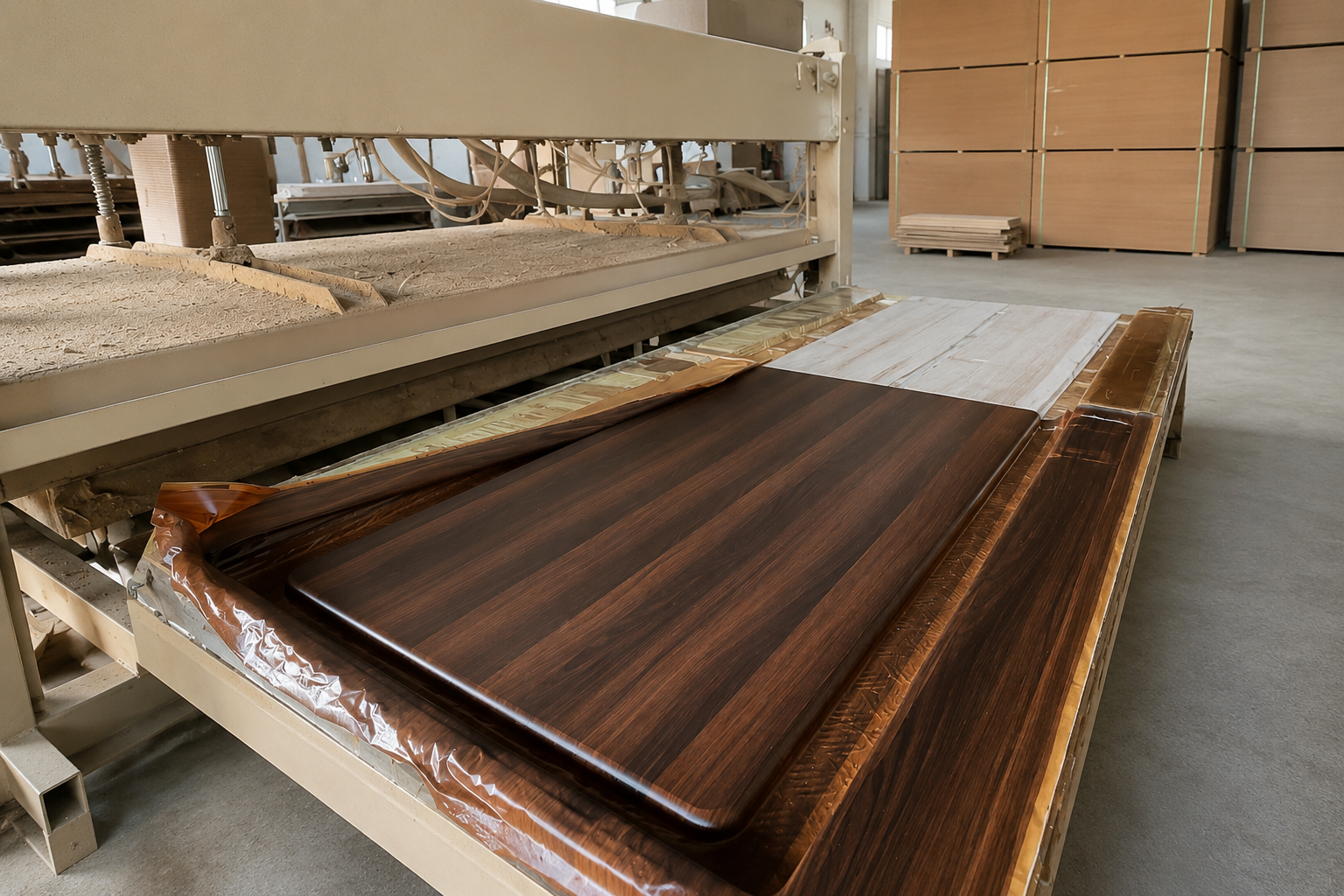
MDF and melamine describe different parts of the tabletop. MDF is the board that gives the panel its shape and thickness. The melamine surface provides the colour, pattern and finished face.
In thermally fused panels, resin-treated decorative paper is bonded directly to the board using heat and pressure. The Composite Panel Association’s TFL panel standard explains this construction. As a result, “MDF with a melamine finish” is a useful specification, while “wooden tabletop” leaves several questions unanswered.
Ask the supplier to identify the core material and finished panel thickness. Then confirm how the edges and underside are finished. A photograph taken from above rarely shows these details, although they belong on the same specification sheet as the tabletop colour.
A small swatch helps narrow down colours, but it cannot show how a pattern works across a whole table. Large marble-style veins may look quite different on a 120 cm surface than on a small sample. Woodgrain direction also changes the appearance of a rectangular top.
For example, the DM-DNM403 four-person dining set combines a 120 × 67 cm table with black metal frames and a choice of stone-look or wood-effect finishes. These versions share a design, but give retailers different looks to consider for their collection.
Compare the tabletop and chair seats together under the same lighting. If the seats are meant to match, check their colour and texture as a set. Keep an approved physical sample for the order, since screen brightness and photography can make the same finish appear warmer or cooler.
Once the finish is settled, consider where the set will be used. A four-chair arrangement may suit an apartment furniture range, while a larger family dining collection needs more seating and a different footprint.
The DM-MLB2029 eight-person set, for instance, uses a 200 × 100 cm tabletop. Comparing it with a compact set is useful when planning a range, but table dimensions are only part of that decision.
Ask for a dimensioned drawing showing the legs and chair positions. Check knee clearance, the space between chairs and how far each chair can move beneath the top. For online listings, an accurate layout drawing can answer questions that a styled room photograph leaves open.
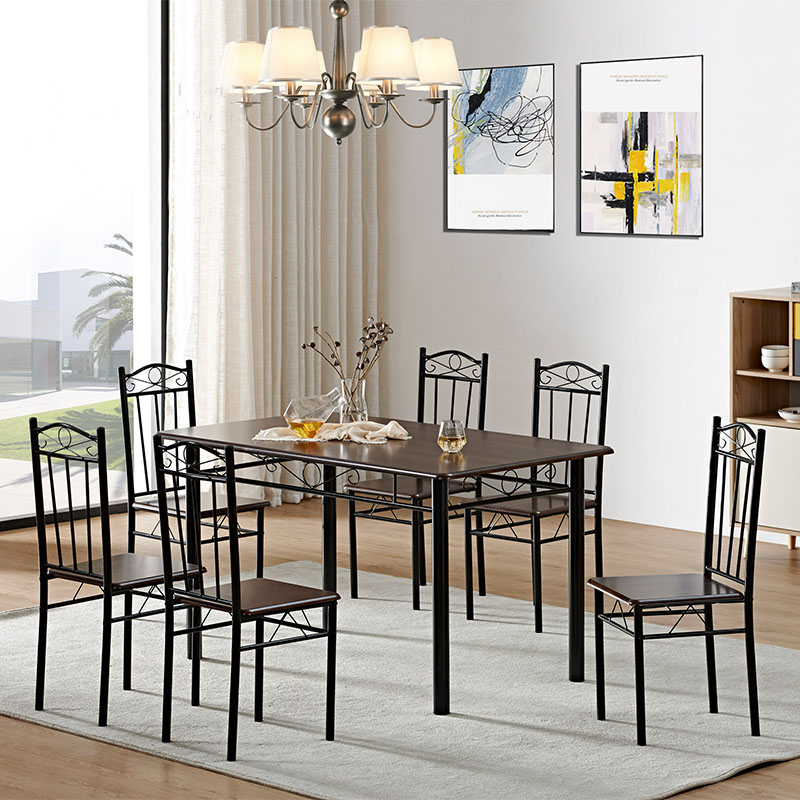
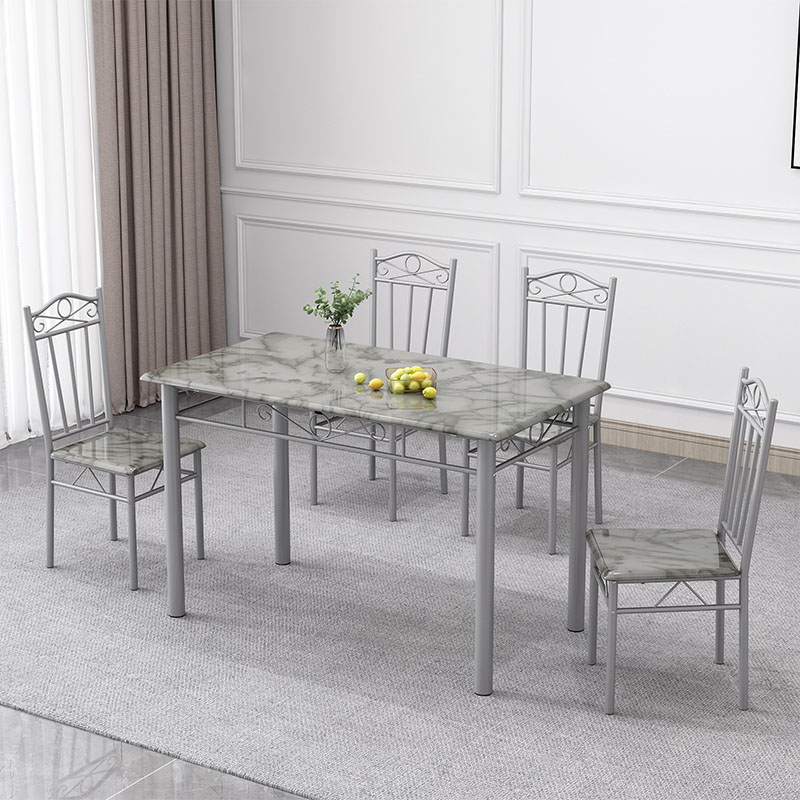
When the sample arrives, inspect the corners and edges for chips, gaps or uneven finishing. Then assemble the table and chairs using the supplied instructions. Check hole alignment, hardware quantities and whether the assembled pieces sit evenly on a level floor.
These checks help you assess the finished furniture beyond its surface pattern. If you need evidence for a particular use, ask for test reports that identify the relevant model and configuration. A material name alone does not establish the performance of the complete set.
Care instructions deserve attention too. For everyday cleaning, follow the supplier’s directions and avoid leaving spills around edges or joints. Use protection under hot cookware and avoid abrasive scouring pads. EGGER’s cleaning and care guidance provides a useful reference for decorative surfaces, although the instructions supplied with the finished table should take priority.
Before comparing final quotations, confirm the number of cartons per set, carton dimensions, gross weight and total packing volume. Check whether the quoted CBM covers both the table and all chairs. Otherwise, a lower unit price may hide a less favourable shipping arrangement.
Also ask how the tabletop corners, metal frames and hardware are separated inside the packaging. Assembly instructions and clearly labelled fittings are worth reviewing at the sample stage, when changes are easier to discuss.
If you are putting together a new dining range, start with the seating sizes and finishes your customers need. The collections at Damon Home Furniture offer a starting point for that comparison. With a shortlist in hand, you can discuss samples and packing against the same requirements, making the differences between quotations much easier to understand.
